Platform data flow management
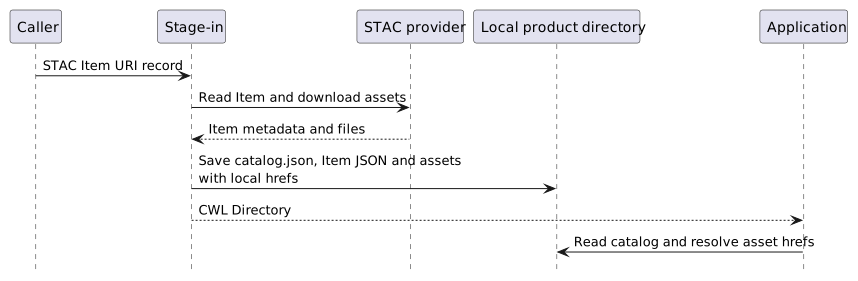
The platform translates an EO product reference into the application's local STAC manifest, then persists the results. See OGC Best Practice 20-089r1, section 9.4.
Stage-in
The example downloads a referenced STAC Item and its assets, rewrites local paths, and saves a self contained catalog. The general platform model can also support remotely accessible assets; the training tool downloads them.
Stage-out
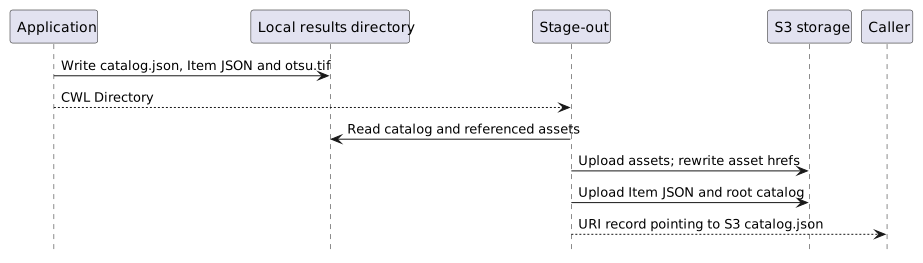
The application creates a local catalog describing its output. The example uploads referenced assets and Item JSON, rewrites their locations to S3, and uploads the root catalog last. It does not register results in a separate searchable catalog service or implement an OGC API Processes endpoint.
Water body detection example
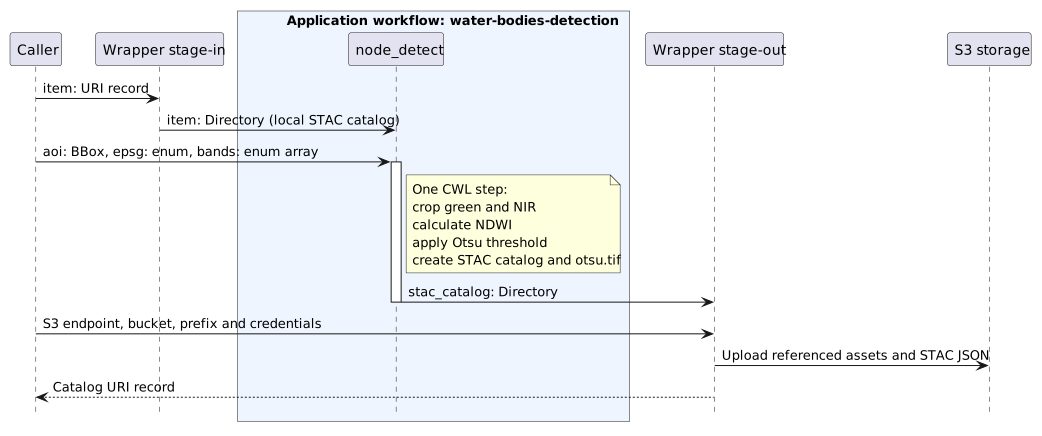
This diagram matches app-water-bodies.cwl: the application workflow has one node_detect step. Cropping, NDWI calculation, Otsu thresholding, and STAC creation happen inside that step. There is no CWL scatter in this implementation.
See typed interfaces and execution commands. To edit or regenerate diagrams, follow documentation maintenance.